An item of property owned by a person or company, regarded as having value and available to meet debts, commitments, or legacies.
Example: By QMS aspect, the optimization of human resources is a very important asset that provides a competitive advantage for the enterprise.
en: Actif
Balance sheet
noun
A statement of the assets, liabilities, and capital of a business or other organization at a particular point in time, detailing the balance of income and expenditure over the preceding period
Example: He couldn't explain the irregularities in the balance sheet, and I suspect him of taking the money.
en: Bilan
Break-even point
noun
In accounting and business, the breakeven point (BEP) is the production level at which total revenues equal total expenses.
Example: If you don't know your break-even point, you're running your business blindly
en: Seuil de rentabilité
Cash cycle
noun
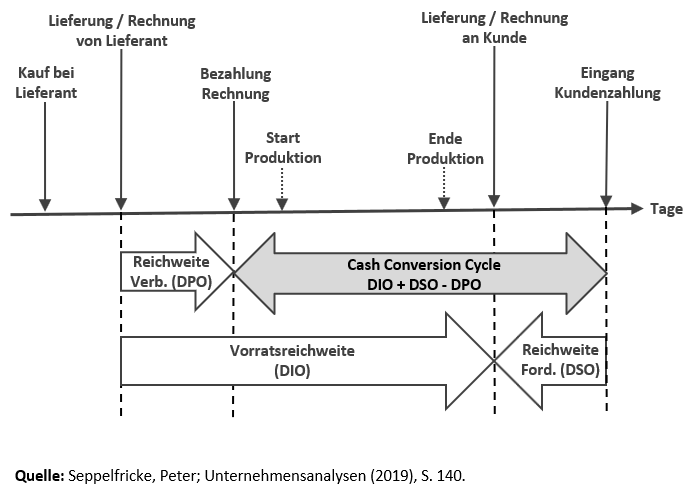
The cash conversion cycle (CCC) – also known as the cash cycle – is a working capital metric which expresses how many days it takes a company to convert cash into inventory, and then back into cash via the sales process.
Example: This firm has a negative cash conversion cycle.
en: Cycle de trésorerie
Charge off
noun
A charge-off or charge off is a declaration by a creditor (usually a credit card account) that an amount of debt is unlikely to be collected.
Example: The firm had to charge off the debt as hopeless.
en: Amortir
Chart of accounts
noun
The chart of accounts is a tool that lists all the financial accounts included in the financial statements of a company.
Example: A business that doesn't have a form can check local office supply stores for standard forms, or one can easily be customized through a spreadsheet program to agree with your chart of accounts.
en: Plan comptable
Current assets
noun
Cash and other assets that are expected to be converted to cash within a year.
Example: In Premier Lodge case, this may lead to a further cost on their investment or development on their current assets.
en: Actifs circulants
Current liabilities
noun
Amounts due to be paid to creditors within twelve months.
Example: The ratio uses the current liabilities as the denominator and so can also tell how able the company is to meet financial commitments.
en: Passifs courants
Debtor
noun
A person or institution that owes a sum of money.
Example: Generally, debtors must negotiate with each creditor separately.
en: Débiteur
Deferred revenue
noun
Deferred revenue is money received by a company in advance of having earned it.
Example: You offer a one-year plan that breaks down into monthly payments of $12.99. Your customer makes an advance payment for their first year upon subscription. This revenue is deferred until they have received a full year's use of your service
en: Revenus reportés
Equity
noun
The value of the shares issued by a company.
Example: He owns 62% of the group's equity.
en: Équité
Expenditure
noun
The act of expending something, especially funds; disbursement; consumption.
Example: A change in disposable income leads to changes in consumption expenditure and saving.
en: Dépense
Goodwill
noun
Goodwill is an intangible asset (an asset that's non-physical but offers long-term value) which arises when another company acquires a new business.
Example: Adjustments for Goodwill and Provisions are areas in which Kidde can affect profit levels by subjective judgments.
en: Bonne volonté
Interest
noun
Money paid regularly at a particular rate for the use of money lent, or for delaying the repayment of a debt.
Example: If the budget show the organisation has an excess then it may be able to invest to earn interest, if it is going to be low then arrangements have to be made to borrow money.
en: Intérêt
Investment
noun
The action or process of investing money for profit or material result.
Example: Additionally, due to the close cultural links between the UK and Canada and the UK and the United States, trade and investment among these countries would be enhanced and accelerated, so trade between the UK and the North American countries would be subject to relatively few trade barriers and the UK would liberalize faster and more extensively.
en: Investissement
Leasehold improvement
noun
Leasehold improvements are expenditures relating to the alteration or modernization of the leased asset that appreciably prolongs the item's period of usefulness or improve its functionality.
en: Améliorations locatives
License
noun
A permit from an authority to own or use something, do a particular thing, or carry on a trade (especially in alcoholic beverages)
Example: Tektronix never charged license fees, but was protected against other's claims.
en: Licence
Mortgage
noun
A legal agreement by which a bank or other creditor lends money at interest in exchange for taking title of the debtor's property, with the condition that the conveyance of title becomes void upon the payment of the debt.
Example: I put down a hundred thousand in cash and took out a mortgage for the rest.
en: Hypothèque
Profit
noun
Profit is the money a business pulls in after accounting for all expenses.
Example: A supermarket cannot continue to operate if it does not make any profit and so it is essential to know how to increase the total revenue.
en: Profit
Running cost
noun
The running costs of a business are the amount of money that is regularly spent on things such as salaries, heating, lighting, and rent.
Example: Even though the amorphous PV has lowed capital cost and lower running cost, it costs more for the energy produced.
en: Coût de fonctionnement
Solvency
noun
The possession of assets in excess of liabilities; ability to pay one's debts.
Example: The company was confident that solvency could be maintained.
en: Solvabilité
Stock
noun
A stock, also known as equity, is a security that represents the ownership of a fraction of the issuing corporation.
Example: Transhumance may have included 'communal' movement relocating the entire system, including people, STOCK and resources, to a fairly local site; or 'seasonal' expedition by a few individuals over greater distances.
en: Stock
Tax
noun
A compulsory contribution to state revenue, levied by the government on workers' income and business profits, or added to the cost of some goods, services, and transactions.
Example: he British Medical Journal recently claimed that such a tax could help prevent 1,000 premature deaths from heart disease a year in the UK.
en: Impôt
Wage
noun
A fixed regular payment, typically paid on a daily or weekly basis, made by an employer to an employee, especially to a manual or unskilled worker.